Romania Motorway Network 2026: Current Status, Vignette Prices and Driver's Guide
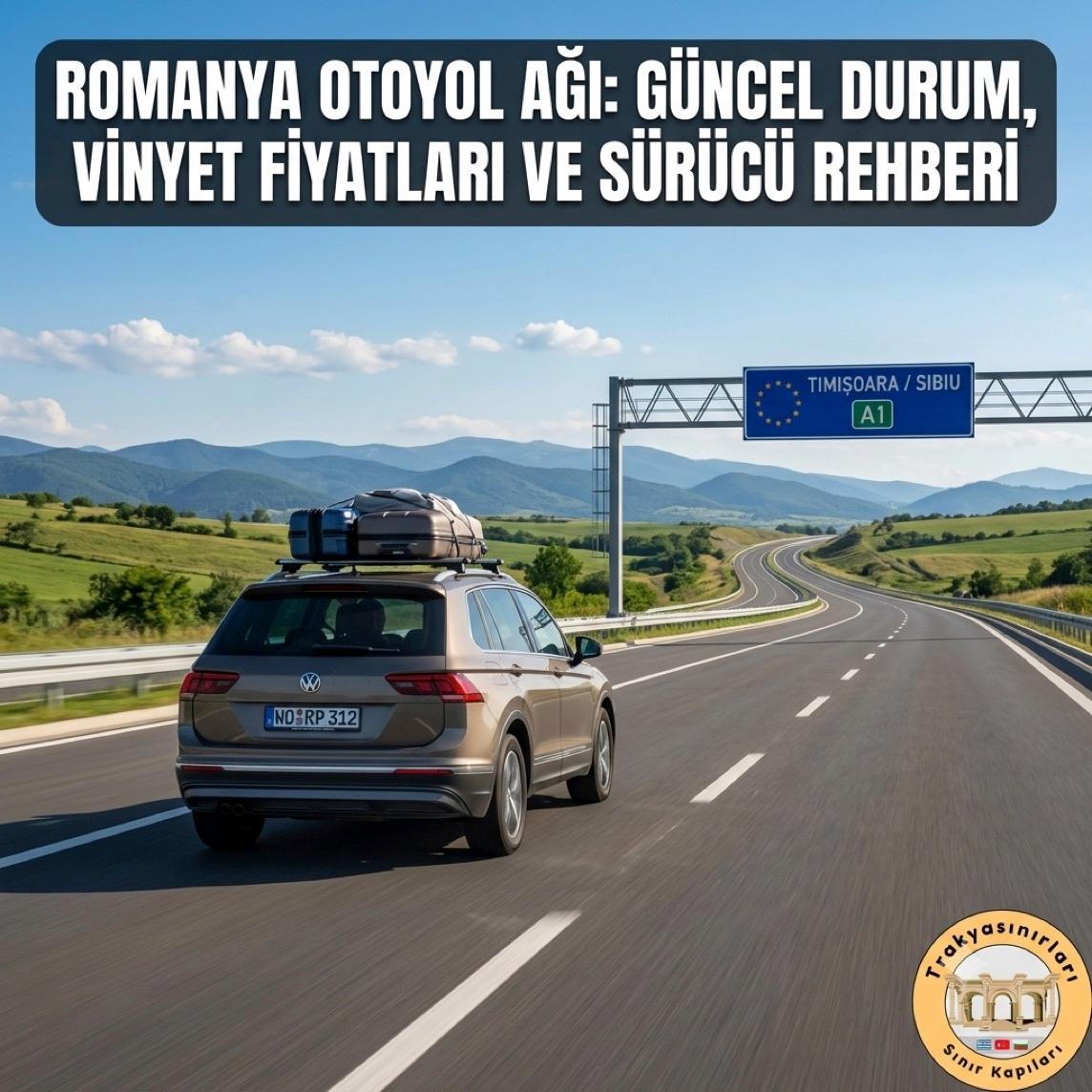
For the Turkish diaspora in Europe, when the time comes in summer to ease their longing for home, planning the Sıla Yolu, the long drive home to Turkey, matters once again. For many years the classic Serbian transit corridor was seen as the one and only option for cars, but especially in July and August, when the wave of travellers from abroad meets heavy truck traffic, it can turn into a real ordeal. Serbia's strict non-EU customs checks, with waits of up to 10–12 hours at the border crossings, have made the search for alternative routes inevitable. This is where Romania, which has invested billions of euros in its infrastructure in recent years, comes to the rescue for Turks living in Europe.
As of 2026, the standards of the "Romania motorway network 2026" have largely left behind the slow single-lane roads through villages of past years. Thanks to projects accelerated with European Union funds, "driving to Turkey via Romania" is now both safer and much faster. At trakyasinirlari.com we are updating this guide with the latest field data for 2026, presenting the status of the motorways, the updated vignette costs and the best-optimised route maps for our drivers.
1. Introduction: Why Drive to Turkey via Romania?
The biggest factor behind Turks living abroad turning to the "Sıla Yolu via Romania" is the smoother customs experience. As Romania and its neighbour Bulgaria have both been full Schengen members since 1 January 2025, there are no routine passport checks when crossing from Hungary into Romania or from Romania into Bulgaria, so these crossings are much faster than the borders of third countries such as Serbia. Especially at the peak of the holiday season, keeping moving behind the wheel instead of being stuck in jams on Serbian motorways and waiting for hours at border crossings is far more rewarding in terms of both time and mental energy.
2. Latest Status of Romania's Main Motorways (2026)
Here is the current 2026 construction and kilometre status of the main motorway corridors that directly affect the travel comfort of drivers using Romanian roads:
A1 Motorway (Hungarian Border → Timișoara → Sibiu → Pitești → Bucharest)
The backbone that travellers on the Sıla Yolu use from the moment they enter Romania is the "Romania A1 motorway". Coming from the Budapest direction in Hungary and joining Romania at the Nădlac border crossing, this route runs via Timișoara, Arad and Sibiu to the capital Bucharest. As of 2026, the vast majority of the A1 is open to continuous traffic. A large part of the difficult tunnel and viaduct sections through the Carpathian mountain passes, which caused serious slowdowns in previous years, has been completed and opened to drivers. However, as infrastructure widening work is still going on in places on some mountainous stretches between Sibiu and Pitești, traffic in these areas may temporarily be diverted onto the old national roads (DN7 and DN6). Based on the current kilometre status, the A1 is Romania's most developed transit corridor.
A2 Motorway (Bucharest → Constanța)
The fully completed A2 motorway links the capital Bucharest directly with the port city of Constanța on the Black Sea coast. For drivers who want to use the Black Sea coastal road or plan to head down to Turkey via Dobruja/Vama Veche, it is an excellent dual-carriageway alternative with high-quality asphalt.
A3 Motorway (Transylvania Motorway)
Certain sections of the Transylvania motorway (A3), planned to start in Bucharest and connect to the Hungarian border via Brașov, Cluj-Napoca and Oradea, are open to traffic as of 2026. Although it makes things much easier regionally, especially for drivers travelling in the mountainous interior, the route has not yet become a continuous motorway from end to end. For the Sıla Yolu, the A1 is still the primary and fastest option.
3. Romania's Current Vignette (Rovinieta) System in 2026
To use motorways and national roads in Romania, you must buy a digital road-use vignette (Rovinieta) in line with the "Romania vignette price 2026" standards. As Romanian customs and motorway cameras carry out automatic checks with number plate recognition, the fines for driving without a vignette are very heavy.
2026 Vignette Tariff for Cars (Category A):
- Durations: 1, 10, 30 and 60 days and 12 months (since 1 October 2026; the former 7- and 90-day options were withdrawn).
- Price: set in RON and depends on the car's Euro emission class.
- Current tariff: on the Romania vignette page, checked against the official source.
Where to buy it? Before you reach the Romanian border, you can register your vignette digitally to your number plate via the officially authorised rovinieta.ro website or at the official sales terminals at the border. We recommend keeping the receipt you are given after purchase until the end of your journey.
4. Speed Limits and Traffic Rules
The Romanian traffic police (Politia Rutiera) are extremely strict, especially with foreign-plated vehicles and speeding. To avoid fines, you should strictly observe the current 2026 speed limits:
- Motorways (Autostradă): 130 km/h
- Expressways (Drum Expres): 100 km/h
- National roads outside built-up areas (Drum European/National): 90 km/h
- In towns / built-up areas: 50 km/h (When passing through villages, the limit can suddenly drop to 30 km/h — watch out for the signs).
5. Fuel Stations and 2026 Prices
Romania is well developed in terms of fuel quality and station infrastructure. Along the route, stations of world-famous brands such as OMV, Petrom, Lukoil and Shell are open 24/7. At these stations you will find modern restaurants, clean baby-changing areas and free Wi-Fi.
Petrol and diesel prices in Romania are generally below the Western European average. These prices, economical compared with Western European countries, allow travellers to fill up their tanks in Romania with confidence. You can check current changes during your journey on our Fuel Prices page.
6. Invaluable Tips for Drivers
- Advanced speed camera network: As of 2026, Romania has expanded its network of fixed and mobile speed cameras, including average-speed checks (camera-based fines), on motorways and national roads. Unmarked police cars are frequently seen, especially at the ends of motorways and at village entrances.
- Night driving warning: Street lighting at night may be inadequate on national roads off the motorway. When driving at night over Carpathian mountain passes and on rural roads, take extra care with sudden bends, reduced visibility due to fog and stray animals.
7. The Most Up-to-Date Route Guide to Turkey via Romania 2026
For your "route via Romania 2026", there are two main corridors to choose from, optimised for road conditions and the season:
Corridor A (Classic Inland Route – via Calafat)
You leave Hungary's Szeged region and enter Romania at the Nădlac customs crossing. Since 2025 Nădlac has been a Schengen internal border, so there are no routine passport checks. You then pass Arad and Timișoara on the continuous A1 motorway. Depending on the state of the motorway, you head down to the Drobeta-Turnu Severin line and reach the Calafat border crossing in the south. Here you cross the river into the Bulgarian city of Vidin over the Calafat–Vidin bridge (Danube Bridge 2). After Vidin, you follow the direction of Montana and the capital Sofia and reach the Edirne Kapıkule Border Crossing via Svilengrad. This route is about 2,400 km in total.
Corridor B (Black Sea Coastal Route – Scenic Alternative)
After entering from Hungary, you drive on the A1 straight to the capital Bucharest and then on the A2 motorway to Constanța. From Constanța you turn south and enter Bulgaria (Durankulak) via the Vama Veche customs crossing. You pass Bulgaria's coastal resort cities of Varna and Burgas and connect to Turkey via Dereköy or Kapıkule. With a total distance of about 2,600 km, this route is an excellent alternative, especially in summer, for drivers who want a calmer journey with sea views.
2026 Summary of Transit Vignettes:
- Hungary e-matrica: current price
- Romania rovinieta: current price
- Bulgaria e-vinetka: current price
8. Arriving at Kapıkule: Checking Traffic and the Hamzabeyli Detour
After a long and safe journey through Romania, when you approach the Turkish border via Bulgaria (Bulgaria Border Crossings guide), you have to make your final decision. With about an hour left to the border, be sure to watch the Kapıkule Live Camera on your smartphone. If you see heavy congestion in the main Kapıkule customs area, immediately switch your navigation to the Hamzabeyli Border Crossing. With its fast crossing for cars, Hamzabeyli will save you from waiting for hours at customs.
9. Conclusion: When Should You Choose the Romanian Routes?
In the 2026 summer season, in July and August, when the queues of travellers from abroad peak at Serbian customs, the Romanian corridor is definitely the most sensible option. With its expanding motorway network, reasonable vignette prices and comfortable customs crossings, Romania turns your Sıla Yolu from an ordeal into a safe journey home. Throughout your journey, don't forget to follow our Romania Border Crossings page for the live status of all customs points and the latest road updates. Have a safe trip!
Sources
The regulations, fees and procedures described on this page are based on the official sources below. Rules set by public authorities can change, so please check the latest information directly with the source.
- Romanian electronic vignette and bridge toll (rovinieta) — CNAIR — Romanian National Road Infrastructure Company
Rovinieta tariffs, validity periods and the Fetești–Cernavodă bridge toll.
- Entry/Exit System (EES) — traveller information — European Commission
Mandatory biometric registration at the Schengen border, the end of passport stamping, and the 90/180-day counter.
Links last checked on 9 September 2026.