Germany to Turkey via Romania: How Many km, Costs and Route 2026
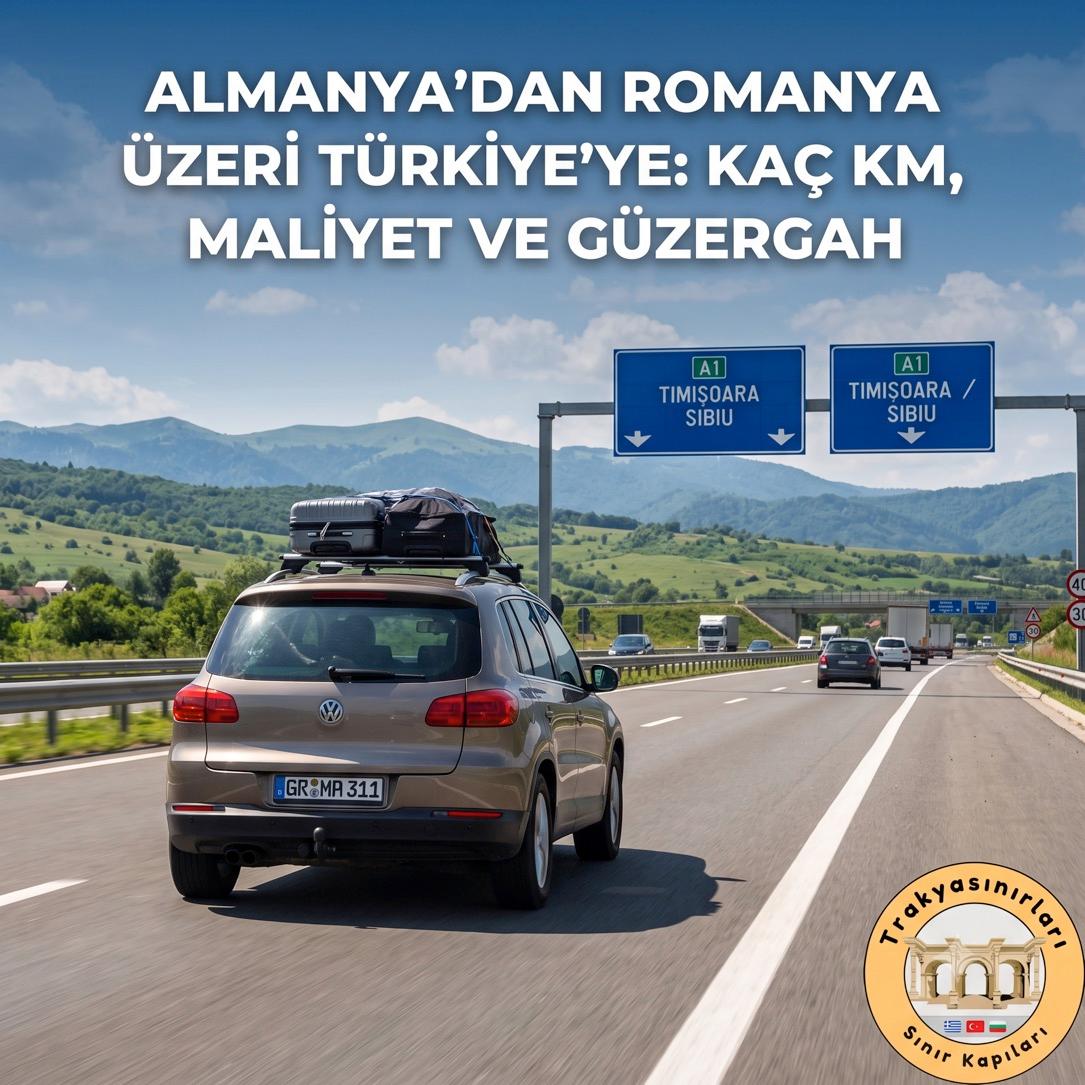
As the summer season approaches, Turks living in Europe start preparing for the Sıla Yolu, the journey home, in earnest. The traditionally favoured classic Serbia route, despite its uninterrupted motorways, is known for customs queues stretching for kilometres, especially in July and August. For drivers who do not want to wait for hours in the heat and who are looking for a different adventure and a calmer transit, the most popular option of recent years is the Romania corridor.
As of 2026, with infrastructure works gathering pace, the "Sıla Yolu via Romania" has become a much more practical and sensible option for cars. In this comprehensive guide we look one by one at everything you want to know, from the current answer to "Germany to Turkey via Romania: how many km" to budget details, border crossings and the latest state of the motorway network. Let us start planning your journey from top to bottom with data from trakyasinirlari.com.
1. Introduction: Why via Romania?
The main motivation for choosing the Romania route on the Sıla Yolu is to avoid completely the congestion at Serbian customs, which sometimes reaches 10-12 hours. Because Serbia is not a member of the European Union, customs and passport checks are much stricter and slower. Romania, as an EU member, gives Turkish expats far more flexibility in transit. Especially at the peak of the holiday season, this route, slightly longer in kilometres, can turn into a big time advantage because it reduces waiting at the border to zero or to a minimum.
2. Detailed Route and Stage Plan (2026)
If you are planning a trip "from Germany to Turkey via Romania", it is extremely important for a comfortable drive to know the route city by city in advance and to plan your rest stops accordingly.
City-by-City Stage Plan
The best-optimised route for a car setting off from southern Germany (for example Munich) is as follows:
Munich → Vienna (Austria) → Budapest (Hungary) → Arad / Nădlac (entry into Romania) → Timişoara → Drobeta-Turnu Severin → Calafat (exit from Romania) → Vidin (entry into Bulgaria) → Sofia → Edirne Kapıkule (entry into Turkey)
Total Distance and Estimated Time
- Total Distance: Starting from southern and central Germany, the distance to Edirne via the Romania corridor is around 2,400 km.
- Estimated Driving Time: Including standard crossing times at the border posts, this route takes an average of 26 to 30 hours at the wheel. On this route, on average 150-200 km longer than the Serbian road, it is strongly recommended for road safety and driving comfort to split the journey over 2 days (at least 1 night in a hotel).
3. Border Crossings and Transit in Detail
When planning the "Romania route 2026", knowing the character of the crossing points determines what strategy you follow as you approach the border.
- Nădlac (Hungary - Romania): This is where you enter Romania; as Romania has been a full Schengen member since 1 January 2025, there are no routine passport checks here. On days when the stream of Turkish expats peaks in summer, there can be waits at times. The Turnu or Vărșand crossings can be considered as alternatives. For detailed alternatives, see our Hungary border crossings guide.
- Calafat - Vidin (Romania - Bulgaria): You cross on the huge Danube Bridge (New Europe Bridge) connecting the two countries. The bridge crossing is subject to an extra toll for cars. For crossing conditions, follow the latest announcements on our Romania border crossings page.
- Kapıkule (Bulgaria - Turkey): The main customs centre where you enter Turkey, reached by heading south from Bulgaria's Sofia line.
4. Romania's Motorway Network 2026: Current Status
In past years, Romania's single-lane roads running through villages put Turkish expats off. As of 2026, however, the situation has changed considerably.
- A1 Motorway: Starting as soon as you enter at the Nădlac crossing on the Hungarian border, the A1 motorway offers uninterrupted, high-quality driving comfort via Timişoara and Deva into the interior. Some of the missing mountain-pass links have largely been completed.
- DN6 and DN56 National Roads: In the southern sections where the motorway network is not yet fully connected (heading down towards Drobeta-Turnu Severin), national trunk roads are used. Although the asphalt on these roads is good, watch out for speed limits and radar checks.
- Rovinieta (E-Vignette) Price: Road use in Romania depends entirely on the digital vignette (rovinieta) system. Since 1 October 2026 there are 1-, 10-, 30- and 60-day and 12-month options; the price depends on the car's Euro emission class (current tariff: Romania vignette). Buying it online before reaching the border avoids fines.
5. Detailed Cost Calculation (2026 Update)
For drivers who want to know the financial side of driving home via Romania, the average budget breakdown is as follows (calculated for a standard car consuming an average of 7 litres per 100 kilometres):
| Cost Item | Description / Detail | Average Cost (Euro) |
|---|---|---|
| Fuel (Petrol/Diesel) | 2,400 km × 7 l/100 km = 168 litres (avg. price per litre: €1.40, approx. November 2026) | ~ €235.00 |
| Austria Vignette | 10-day digital vignette | Current price |
| Hungary Vignette | 10-day e-matrica | Current price |
| Romania Vignette | Rovinieta (depends on duration and Euro emission class) | Current price |
| Bulgaria Vignette | Weekly e-vinetka | Current price |
| Bridge Toll | Calafat - Vidin bridge, car crossing | Current price |
| TOTAL COST | Fuel + road use + bridge toll | See the calculator |
Work out the total vignette, toll and fuel costs of the Romania route, including the rovinieta and the Calafat–Vidin bridge, for your dates with the Sıla Yolu cost calculator; official prices country by country are on the Romanian vignette and vignette prices pages.
To follow current fuel price fluctuations between countries along the way and optimise your budget, check our Fuel prices page regularly.
6. What to Watch Out for in Romania
- Road Quality and Speed Limits: The speed limit is 130 km/h on motorways, 90 km/h on national roads (DN) and 50 km/h in built-up areas. Romanian police apply hidden radar checks (speed traps) very strictly, especially at village entrances.
- Reliable Fuel Stations: Choose established brands with high fuel quality across the country. Chains such as OMV, Petrom and Lukoil are open 24/7 and offer clean rest areas and restaurants.
- Rest Areas: Newly opened motorway lay-bys have modern, well-lit rest facilities. For your safety, use these large stations rather than stopping in deserted areas.
7. The Last Step at Kapıkule and the Hamzabeyli Alternative
After your long journey, when you finish the Bulgarian motorways (the Bulgaria border crossings route) and approach the Turkish border, you may be tempted to head straight for Kapıkule. But remember that most Turkish expats use this crossing.
In the last 50-60 km before the border, be sure to watch our Kapıkule live camera on your smartphone. If there is a big build-up in the Kapıkule customs area, turn off without wasting time towards the Hamzabeyli border crossing to the north. This move adds very little distance but saves you hours of queuing at customs.
8. Conclusion: When to Choose the Romania Route?
The Romania route should definitely be your first choice especially from the first week of July to mid-August, when school holidays begin and Serbian motorways are jammed. For Turkish expats who would rather see some mountains and nature than an uninterrupted motorway, and who prefer to keep moving at the wheel rather than suffer for hours at border crossings, this route is a perfect fit. The Trakyasınırları family wishes all members of the diaspora a safe, trouble-free and peaceful journey home!
Sources
The regulations, fees and procedures described on this page are based on the official sources below. Rules set by public authorities can change, so please check the latest information directly with the source.
- Romanian electronic vignette and bridge toll (rovinieta) — CNAIR — Romanian National Road Infrastructure Company
Rovinieta tariffs, validity periods and the Fetești–Cernavodă bridge toll.
- Bulgarian electronic motorway vignette (e-vignette) — Bulgarian Road Infrastructure Agency
Vignette requirement, current tariffs and official online purchase.
- Entry/Exit System (EES) — traveller information — European Commission
Mandatory biometric registration at the Schengen border, the end of passport stamping, and the 90/180-day counter.
- Vehicles brought in by travellers — rules for entering Turkey by car from abroad — Turkish Ministry of Trade
How long a foreign-plated car may stay in Turkey, the vehicle tracking programme, and driving licence and registration requirements.
Links last checked on 9 September 2026.